Cutting & Trimming · cost guide
Log Splitter Cost: What You'll Pay by Type in 2026
A log splitter costs $100 to $3,000. Manual runs $100 to $300, electric $300 to $800, gas $1,000 to $2,500. Here's the real cost by tonnage and whether to rent.
What a log splitter costs
Pricing as of July 2026, per Home Depot and Wood Splitter Direct listings, July 2026.
Prices vary by brand, model, and region. Confirm the current price with the retailer before you buy.
As an Amazon Associate, YardBuff earns from qualifying purchases.

Cost by type
| Type | Typical price | Best for |
|---|---|---|
| Manual (hydraulic or kinetic) | $100–$300 | A few cords a year of small, softer rounds; no power needed. |
| Electric (4–7 ton) | $300–$800 | Seasoned rounds up to ~10"; quiet, indoor-safe, needs an outlet. |
| Gas (20–25 ton) | $1,000–$2,500 | Big, green, or knotty rounds; the homeowner firewood workhorse. |
| Gas (28 ton+) | $2,000–$3,000 | Hardwood, large diameters, and heavy seasonal volume. |
A log splitter costs $100 to $3,000. A manual splitter runs $100 to $300, an electric model $300 to $800, and a gas splitter $1,000 to $2,500 for the common 20-to-25-ton homeowner machines. What you pay tracks splitting force (rated in tons) and whether it’s manual, electric, or gas.
Tonnage is the number that matters: it’s the force the ram delivers, and bigger, greener, knottier rounds need more of it. Diameter and wood hardness decide how much you need.
Which type do you need
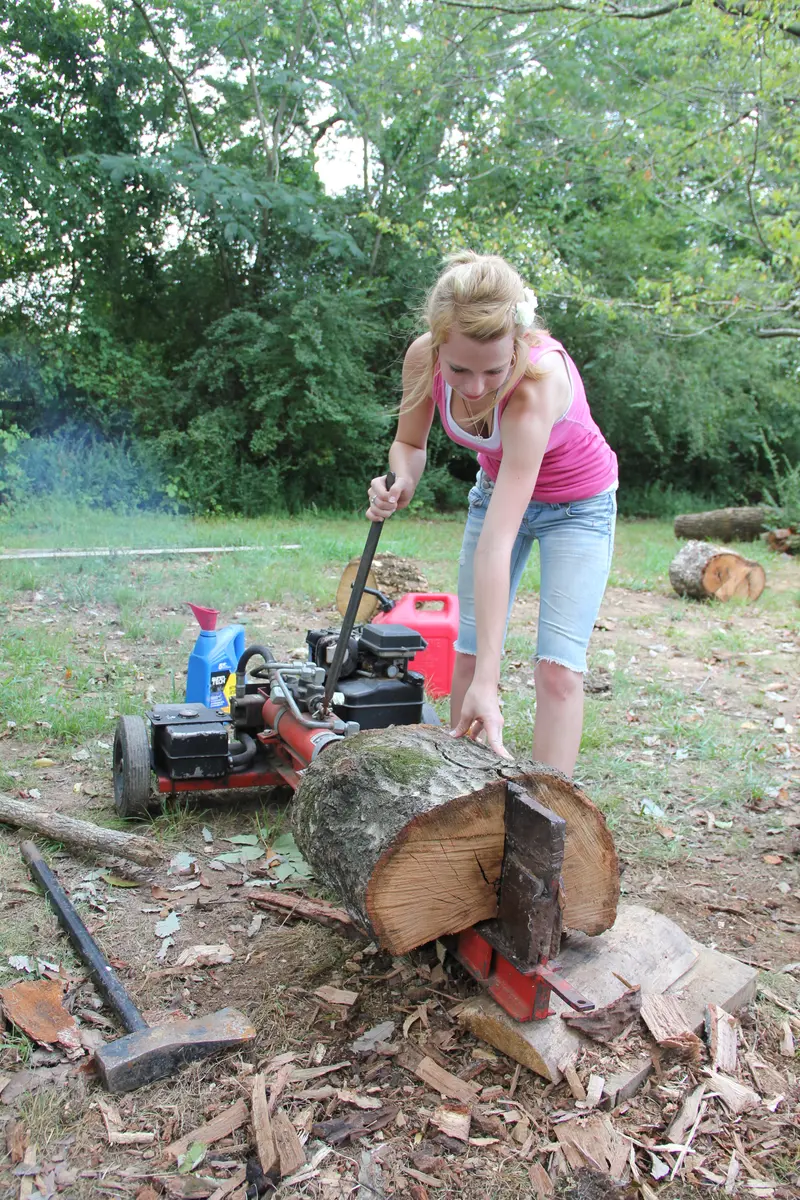
A manual splitter ($100 to $300) uses a hydraulic jack or a kinetic flywheel and your muscle. It’s cheap and quiet, fine for a few cords a year of small, softer, well-seasoned rounds, but slow and tiring on anything big.
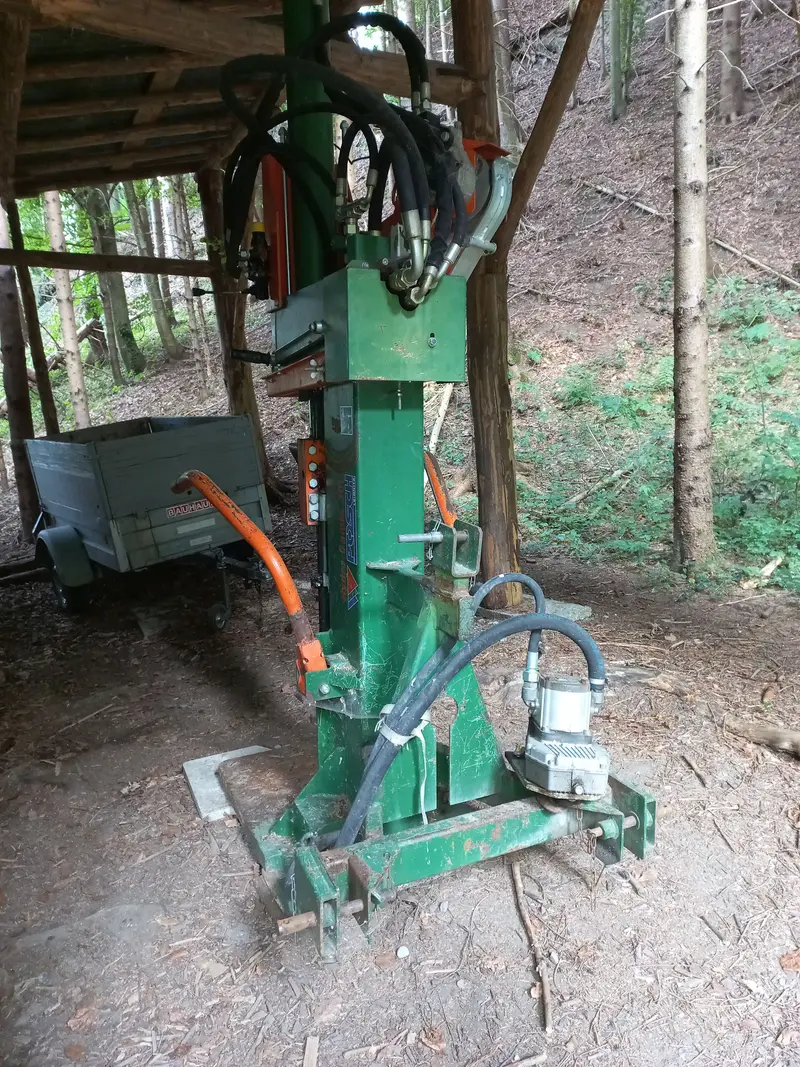
An electric splitter ($300 to $800, usually 4 to 7 tons) plugs into a standard outlet, runs quietly enough for a garage, and handles seasoned rounds up to about 10 inches. It’s the right pick for a homeowner burning a moderate amount of clean firewood.

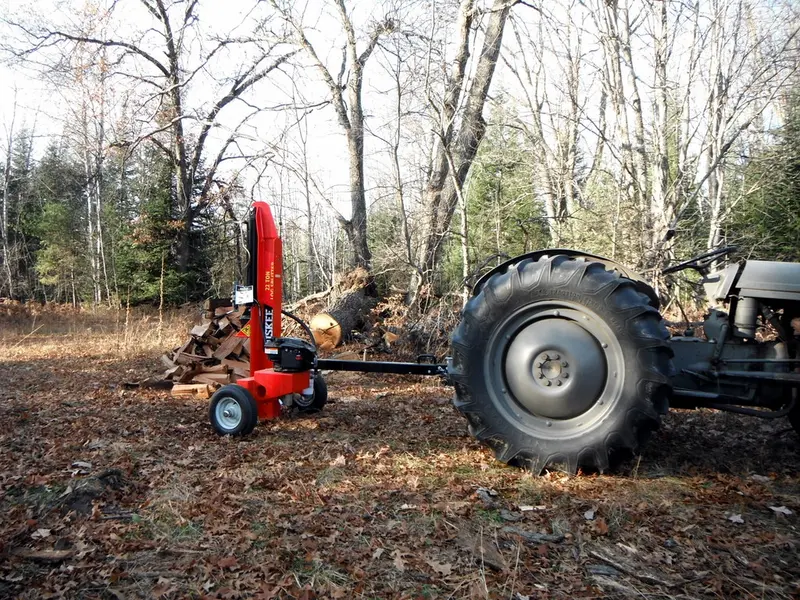
A gas splitter ($1,000 to $2,500 for 20 to 25 tons) is the firewood workhorse. It splits big, green, and knotty rounds a smaller machine chokes on, works anywhere without a cord, and handles real seasonal volume. Step to 28 tons and up ($2,000 to $3,000) only for large hardwood rounds and heavy production.
Buy or rent?
Like tillers and chippers, splitters are a strong rent-versus-buy candidate. A gas splitter rents for roughly $70 to $110 a day, so if you split one or two cords a year, renting the gas machine for a weekend can beat owning a $1,500 unit that sits eleven months. Buy a gas splitter if you heat with wood and process several cords every season; otherwise an electric splitter for routine rounds plus an occasional rental for the big stuff is the cheaper path. Match the tonnage to your typical round, not the biggest oak you’ve ever dropped.
Where to buy
- Electric log splitters (Sun Joe, WEN, Boss) , typically $300–$800 (affiliate)
- Gas log splitters (Champion, County Line, YARDMAX) , typically $1,000–$2,500 (affiliate)
As an Amazon Associate, YardBuff earns from qualifying purchases. Prices and availability are set by Amazon at the time you click.